Ashes of the Singularity II Maps: Sizes and Map Generation
Quick answer
Ashes of the Singularity II uses two kinds of battlefields: pre-built skirmish and multiplayer maps (the officially shown one is Ashfall Caldera, a small map built around choke points) and procedurally generated maps whose seed numbers you can save to replay or share. The game launches on November 10, 2026, so the full shipped map list is not final, but the system is documented in the official store page, developer journals, and alpha gameplay videos.
| Release status | Coming soon, November 10, 2026 (official Steam page)Ashes of the Singularity II on Steam |
|---|---|
| Named map shown by devs | Ashfall Caldera, a small skirmish map with trenches, gullies, and defensible choke pointsAshes of the Singularity II on Steam |
| Max players | Up to 8 players in skirmish and multiplayer (per peer-to-peer system, per player reports)Ashes of the Singularity II Orbitals and Tech gameplay |
| Procedural generation | Generates custom battlefields; seed numbers can be saved to replay or share mapsAshes of the Singularity II Orbitals and Tech gameplay |
How Ashes of the Singularity II maps work: pre-built and procedural battlefields, map sizes, and shareable seeds for skirmish, co-op and multiplayer play.
Table of Contents
Ashes of the Singularity II uses two kinds of battlefields: pre-built skirmish and multiplayer maps (the officially shown one is Ashfall Caldera, a small map built around choke points) and procedurally generated maps whose seed numbers you can save to replay or share. The game launches on November 10, 2026, so the full shipped map list is not final, but the system is documented in the official store page, developer journals, and alpha gameplay videos.
Map sizes and structure
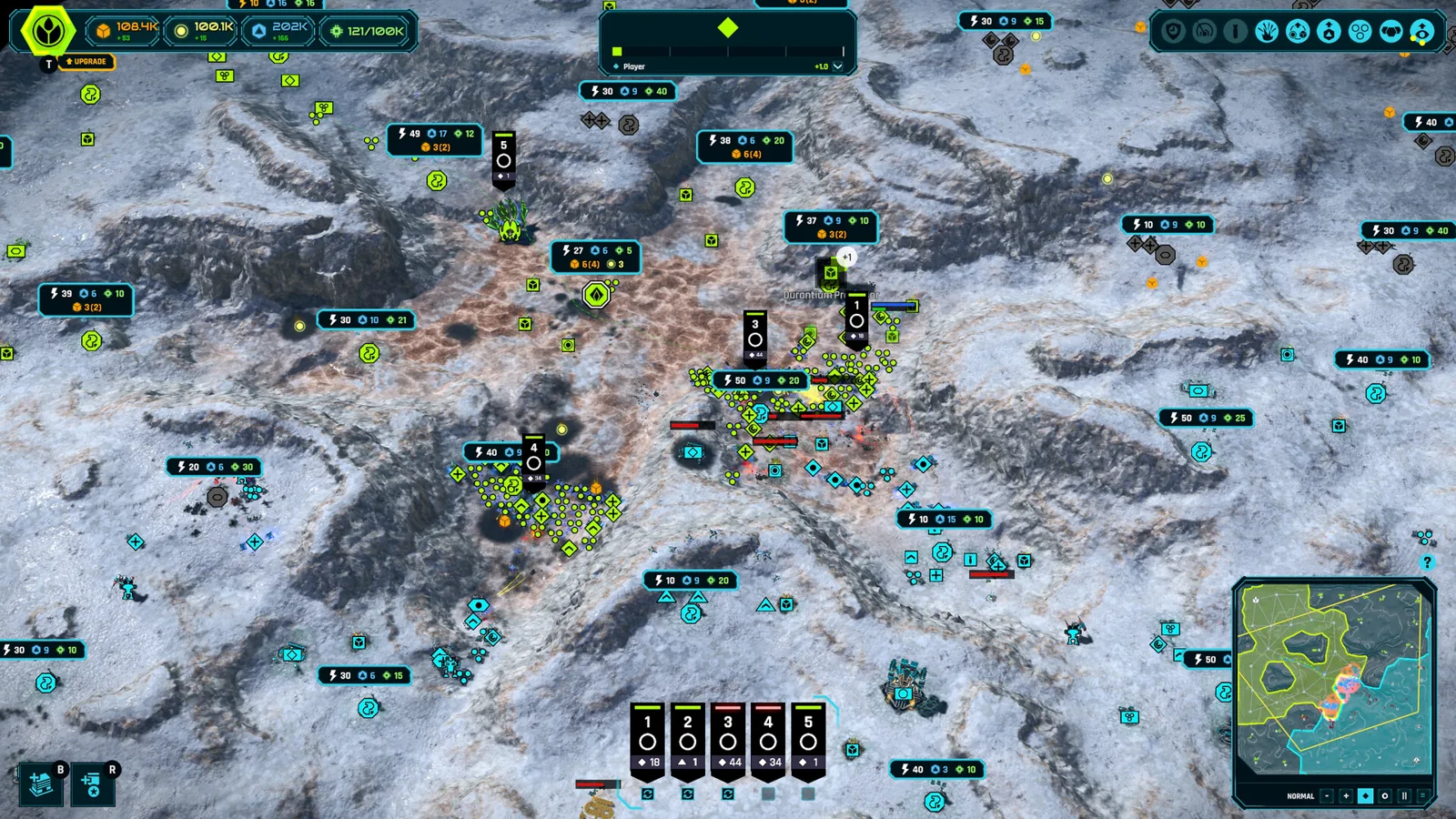
The developers describe the battlefields in Ashes of the Singularity II as continent-sized, with Strategic Zoom letting you move seamlessly from orbital command down to the frontline. These are not flat arenas: maps are full of high and low hills, naturally curving terrain, clearings, and lakes, which directly affects how armies move and where fights happen.
A player video covering the alpha build describes the scale and layout in practice:
- Maps carry a lot of baked-in terrain elevation. High hills block line of sight, and you cannot see past a hillside, so radar stations placed on high ground matter a lot.
- Terrain can split armies or force them to detour around large hills, and a headquarters sitting behind a big hill makes early expansion and regrouping harder.
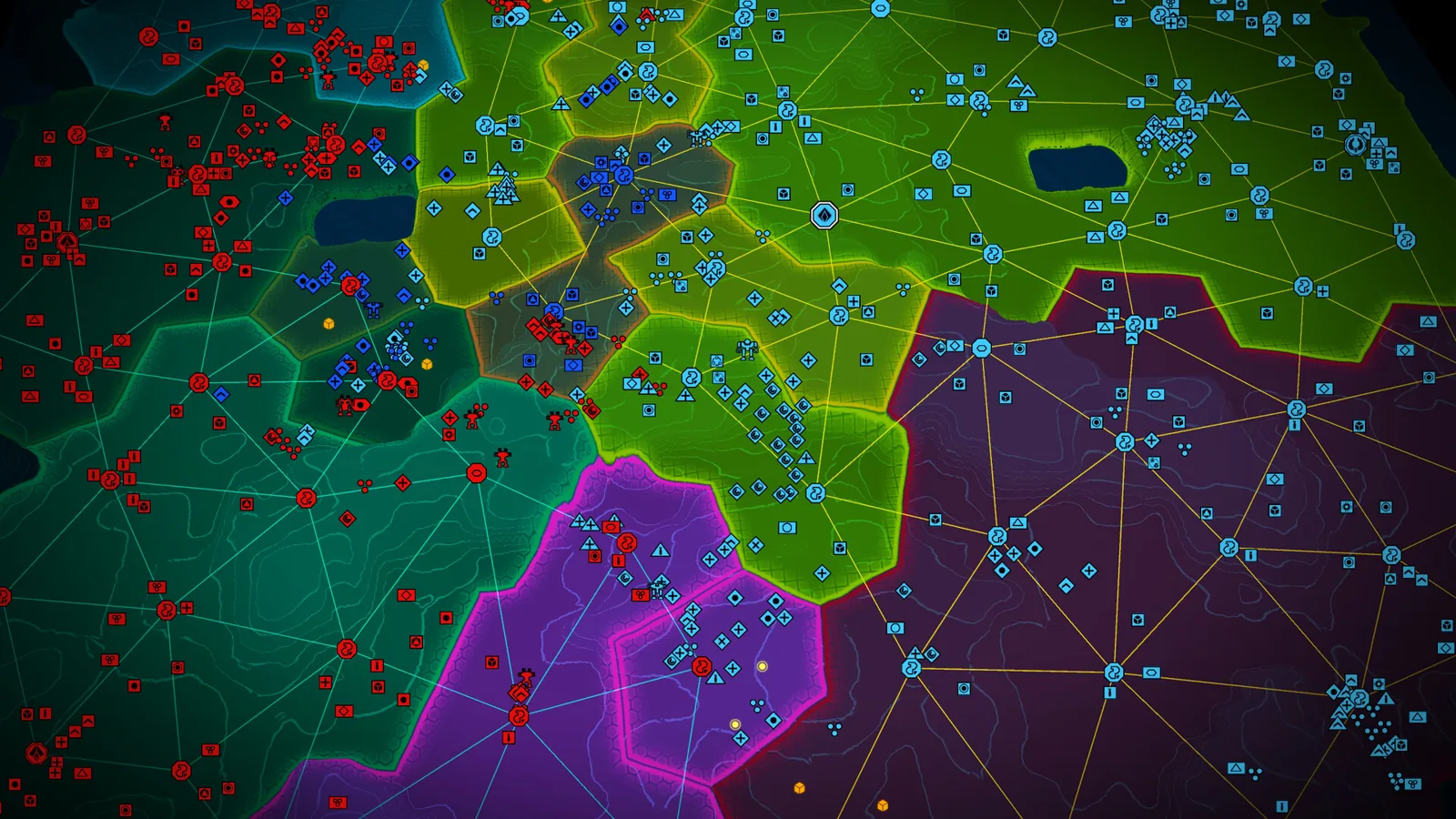
- Territory control is central: you start with an HQ and one territory, then capture neighboring territories at control points to expand, build refineries over durantium and elerite deposits, and push outward.
According to the same player report, the game currently supports up to 8 players in skirmish and multiplayer because of its peer-to-peer connection system. The developers are reportedly aware of demand for bigger team matches and are open to setting up servers for online play beyond 8 players, but nothing beyond 8 is confirmed.
Named maps: what is officially shown so far
The clearest named map so far is Ashfall Caldera, shown in an official developer video journal from October 2026. It is described as a small skirmish map with brutal terrain that funnels armies into a labyrinth of trenches and gullies, creating choke points that a defender can hold against much larger forces. The devs note you will need the right tools to crack into an enemy's home-base region on it — so expect fortification-heavy fights there.
Beyond that, the official materials describe the general terrain variety you will fight across: frozen lakes, treacherous mountain passes, and lava-filled chasms. The official Steam page also promises that in Instant Action you "pick the battlefield of your choice," confirming a selectable map list for skirmish play against AI, with Single-player, PvP, and Co-op all listed as Steam features.
Procedural map generation
Procedural map generation — random maps — is a confirmed feature of Ashes of the Singularity II. The official release announcement lists it under "Endless Replayability: Generate custom battlefields" and take on the built-in AI opponents. First-hand player footage of the development builds explains how it works in practice:
- The game has pre-built maps for different match sizes, but procedural generation exists to keep play fresh until an actual map editor is added.
- You can generate a new map, and the game lets you save the seed number of a generated map so you can replay it later or share it with other players — a shared seed produces the same battlefield.
- Generation is not a single pass. An alpha gameplay video explains that maps go through many cycles to eliminate resource placement imbalances and topography-based pathing issues as much as possible.
Two balance factors still shape generated maps, per that same player's testing:
- Resource placement. Matches need lots of durantium early (buildings and first units) and increasing amounts of elerite later (advanced units, research labs, top-tier turrets). If a start position is short on elerite within a reasonable distance, teching up is slow; too much elerite and you can't produce cheap durantium units fast enough.
- Terrain. A huge hill right outside your HQ or first territory makes early expansion and regrouping painful, especially if you can be attacked from only one direction.
The practical takeaway from players: procedural maps work well against the AI, and human players with enough skill can win from any position — but expect competitive play to happen on pre-built maps, where players report starts are equal.
Using maps in your first matches
- For a controlled learning game, use Instant Action from the main menu and pick your battlefield, opponent count (up to 8 players total), and difficulty.
- On a generated map, note your seed if you have a good match — you can return to or share that exact layout.
- Read terrain before committing: hills block line of sight, so plan radar coverage, and narrow passes (as in Ashfall Caldera) strongly favor defenders with turrets and blocking units.
A note on older community maps
A well-known set of ten downloadable community maps (All War, Ashes War, Central Flame, Centre, Mid Lover, Mid War, Nexus War, Round In, Round Out, Twilight Flame) exists on the official Ashes forums — but these were made for the original 2016 Ashes of the Singularity using its Map Editor, in sizes Large and Enormous for 6–10 players. They are not Ashes of the Singularity II maps, though they show what community-made content looked like in the first game. The sequel's map editor is planned but has not shipped; procedural generation is the tool available now.
Next steps
- New to the game? The beginner guide covers economy and territory capture, which is what map features like nodes and choke points feed into.
- Choke-point maps like Ashfall Caldera reward defense — see the defenses guide for holding narrow terrain.
- If you want to practice on generated maps first, the demo walkthrough covers what the public demo build lets you play.
FAQ
Are there pre-built maps in Ashes of the Singularity II, or only random ones?
Both. The developers state the game ships with pre-built maps for different match sizes, and the release announcement separately lists generating custom battlefields as a core replayability feature. Ashfall Caldera is the named pre-built skirmish map shown so far.
How many players can play on one map?
Player testing of the development builds reports up to 8 players in skirmish and multiplayer, limited by the peer-to-peer multiplayer system. The developers are reportedly open to server support beyond 8 players, but that is not confirmed.
How does procedural map generation balance fairness?
Generation runs multiple iteration cycles to reduce resource placement imbalances and terrain-based pathing problems. Players note it is good enough for solid matches against AI, but starts are not guaranteed equal, so competitive play is expected on pre-built maps.
Can I share a generated map with a friend?
Yes. Per first-hand gameplay of the development build, you can save a generated map's seed number and share it, letting another player regenerate the identical battlefield. A full map editor is planned for later.
Check note: facts above come from the official Steam page for Ashes of the Singularity II (including developer journals and the release announcement, checked 2026-11-05) and first-hand player videos of the alpha and development builds on YouTube. The complete shipped map list and final procedural generation options remain unconfirmed until launch on November 10, 2026.
Related guides for this game
Guide Guides Index
Ashes of the Singularity II Ashfall Caldera Map Guide
Is there an Ashes of the Singularity II Ashfall Caldera map? No confirmed name exists; demo and playtest map counts and region-based tactics explained.
Ashes of the Singularity II Controls and Input Options
Ashes of the Singularity II controls explained: confirmed mouse commands, the E attack-move hotkey, Shift building queues, and controller support details.
Ashes of the Singularity II Army Control: Groups, Orders
Learn Ashes of the Singularity II army control: create armies, set rally points, use formations, reinforce and auto-replenish, and issue move and attack orders.
Ashes of the Singularity II Beginner Guide: First Match
This Ashes of the Singularity II beginner guide walks you through starting skirmish, building your base, capturing regions and winning your first match.
Access Guides Index
Ashes of the Singularity II Playtest: Dates and How to Join
The Ashes of the Singularity II playtest ran September 8-14, 2026 on Steam, joined with one click from the store page. See when it ran and how access worked.
Ashes of the Singularity II Steam Page, Release and Specs
Find the official Ashes of the Singularity II Steam page, its Nov 10, 2026 release date, key features, and the full minimum and recommended PC requirements.